

Poor mobile reception indoors can be more than just annoying it disrupts work, calls, and everyday communication. If you're in a home office, a large building, or a rural property, many Australians face the same issue: great signal outdoors, but barely any inside.
At Fixtel, we help solve these signal dead zones. One solution that continues to make a big difference in both commercial and residential settings is the use of a Distributed Antenna System, also known as DAS. These setups are built to extend mobile coverage throughout spaces where signal strength drops off.
Let's break down how it works and why it's often the most effective choice for fixing indoor coverage issues.
Why Signal Fades Indoors
It's common to lose signal the moment you step into a building. Even if your provider offers solid outdoor coverage, indoor reception can suffer due to:
- Thick walls made of concrete, steel, or brick
- Window glass that reflects or blocks mobile waves
- Long distances from the nearest tower
- Interference from other electronics or structural design
These issues are hard to fix with simple solutions. That's why a system that brings the signal inside—without depending on Wi-Fi—is often necessary.
What a Distributed Antenna System Does
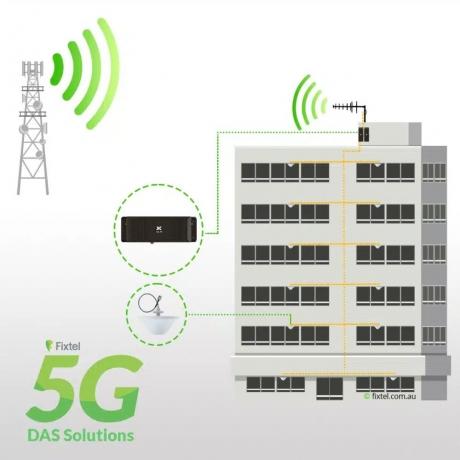
Instead of relying on a single device to boost the signal, a Distributed Antenna System uses multiple low-power antennas placed throughout the building. These antennas work together to distribute signals evenly, eliminating weak zones.
Here's the general flow:
- A donor antenna (usually outside) receives the signal from your mobile network.
- The signal is processed through a system controller or repeater.
- The signal is then pushed out through a series of DAS antennas placed indoors.
This approach keeps mobile reception consistent across floors, rooms, or even entire complexes.
Where This Works Best
DAS setups are common in spaces where coverage is patchy or absent altogether. These include:
- Office buildings and corporate campuses
- Apartment blocks and multi-storey homes
- Hospitals, schools, and shopping centers
- Underground facilities or car parks
- Rural properties and remote lodges
In these environments, placing one device at the window won't help much. Spreading signal across several antennas does.
How to Know If You Need One
If you've tried changing providers or moving around the building to get better reception—and still experience dropped calls or slow data—then you may benefit from a properly designed system. A few things to consider:
- You have some signal outdoors, but not inside
- You rely on mobile for work, customer service, or remote operations
- The building has multiple levels or heavy construction materials
- There are frequent complaints about poor reception from staff or visitors
That's where a properly installed DAS antenna setup starts to make sense.
What Makes DAS Different
Unlike consumer-grade boosters or repeaters, Distributed Antenna Systems are scalable and legal for commercial use. They also allow for:
- Multi-carrier support (Optus, Telstra, Vodafone)
- Seamless coverage across all major mobile frequencies
- Cleaner, safer installations that blend into ceilings or walls
- Compliance with ACMA regulations in Australia
This isn't about just buying a gadget—it's about implementing a long-term, effective solution.
The Fixtel Process
When you work with our team, you don't just get a product. You get a solution that's designed for your building, your carrier, and your usage needs.
- We assess your site — measuring signal strength and layout
- We design a custom system — placing indoor antennas for full coverage
- We install the system — discreetly and in compliance with all local standards
- We test and optimize — ensuring strong, stable mobile reception inside
This process ensures that you get real results—not guesswork.
Everyday Impact
Once installed, the changes are immediate. You don't have to search for signals anymore. You can take business calls in every corner of the office. Messages are sent without delay. Video calls don't drop out halfway through.
For many businesses and homeowners, these systems eliminate stress and downtime caused by unreliable reception. They also reduce reliance on Wi-Fi or landlines.
Final Thoughts
Mobile coverage issues aren't just a rural problem. Even in cities, building design can weaken or block reception. That's why a system like this can be essential—especially if communication is critical to how you work or live.
By installing a Distributed Antenna System, you're not just amplifying the signal. You're bringing mobile coverage into every part of your space—safely, legally, and effectively.